

For B2B companies looking to expand into international markets, having a professional website and maintaining a social media presence are no longer enough.
Today's buyers interact with businesses across multiple digital channels. They use Google to research suppliers, explore industry content on LinkedIn, watch product demonstrations on YouTube, and increasingly turn to AI-powered tools such as ChatGPT and Perplexity to discover products and evaluate potential partners.
This shift means that businesses need more than isolated marketing activities. They need an integrated B2B digital marketing strategy that connects search visibility, brand positioning, content creation, and performance marketing.
So, what does an effective digital marketing strategy look like in 2027?
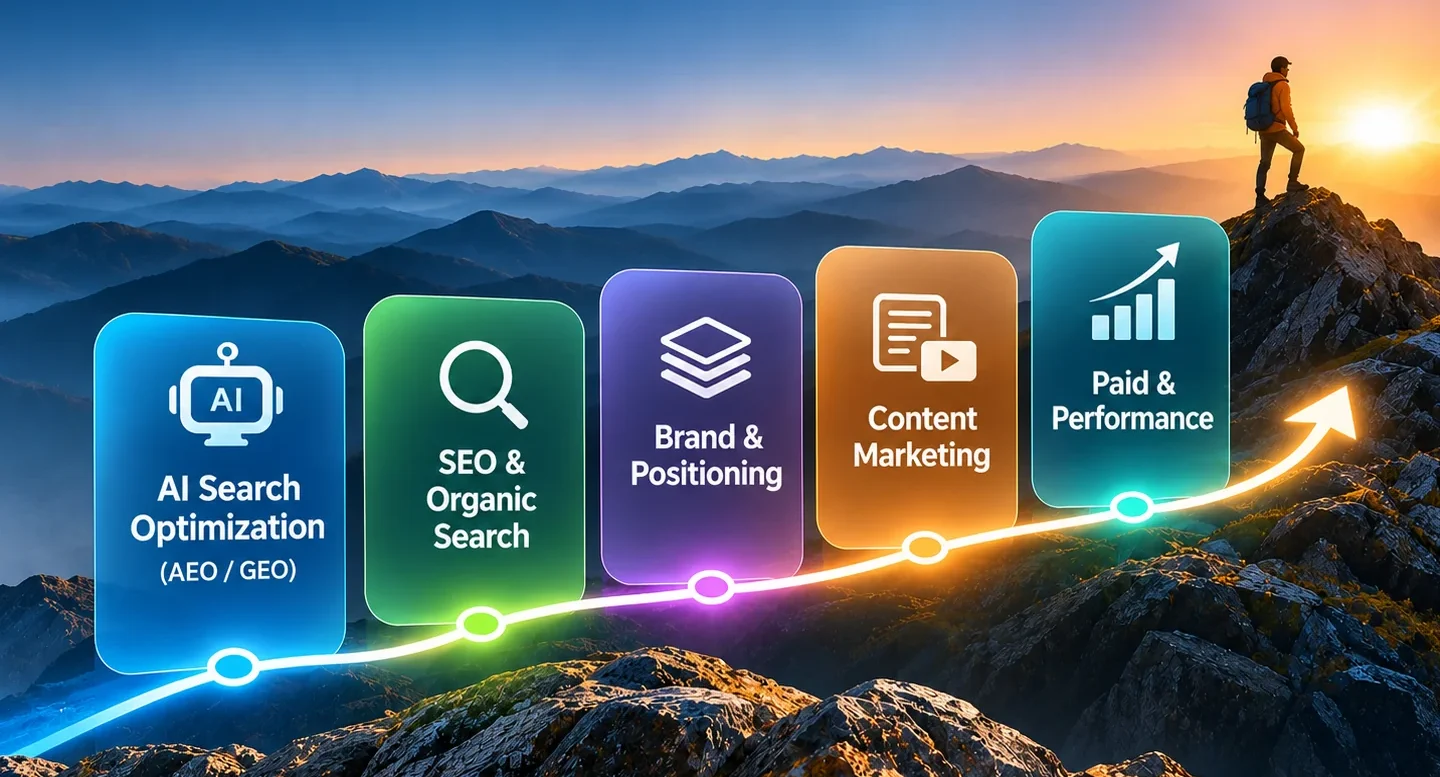
Here are five key pillars that B2B companies should consider when building a sustainable online presence and attracting qualified business opportunities.
1. AI Search Optimization: Make Your Business Visible to AI
Search behavior is evolving. Instead of relying exclusively on traditional search engines, buyers are increasingly using AI-powered platforms to research products, compare suppliers, and find solutions to business challenges.
For B2B companies, this creates a new opportunity: making their brands and expertise visible in AI-generated answers.
AI Search Optimization, often associated with Answer Engine Optimization (AEO) and Generative Engine Optimization (GEO), focuses on helping AI systems discover, understand, and reference relevant business information.
Businesses can improve their AI search readiness through several approaches:
- Create authoritative content: Publish detailed product information, technical guides, industry insights, and practical answers to common customer questions.
- Improve website structure: Organize content with clear headings, logical navigation, and descriptive internal links.
- Implement structured data: Use relevant Schema Markup to help search engines understand business information, products, and content.
- Strengthen brand credibility: Maintain consistent company information and build a trustworthy online presence across relevant platforms.
- Monitor AI visibility: Track how your brand appears in AI-generated responses across platforms such as ChatGPT, Perplexity, and Gemini.
For example, an industrial equipment manufacturer should not only describe its products. It should also publish technical specifications, application scenarios, product comparisons, installation guides, and answers to common purchasing questions.
The goal is to make the company's expertise easier for both potential customers and AI-powered search systems to discover and understand.
2. SEO and Organic Search: Build Sustainable Search Visibility
While AI search is gaining attention, traditional search engine optimization (SEO) remains an essential part of any B2B digital marketing strategy.
Google continues to serve as an important starting point for buyers researching manufacturers, suppliers, products, and technical solutions.
Unlike paid advertising, organic search can generate traffic over time through well-optimized website pages and valuable content.
A comprehensive B2B SEO strategy typically includes:
Keyword Research and Search Intent
Identify the keywords your potential customers use when searching for products, services, and suppliers.
For B2B companies, keyword research should go beyond broad industry terms. It should also consider specific product names, technical specifications, applications, industry standards, and purchasing-related queries.
On-Page SEO Optimization
Optimize important website elements, including:
- Page titles and meta descriptions
- Heading structures (H1, H2, and H3)
- Keyword placement and content relevance
- Image alt text
- Internal linking
- Product and service page descriptions
Technical SEO
A technically sound website helps search engines discover and understand its content.
Important considerations include website loading speed, mobile responsiveness, crawlability, indexability, URL structure, XML sitemaps, and structured data.
Content Development and Backlink Building
Publishing useful industry content and earning relevant backlinks can help establish website authority.
For manufacturers and industrial businesses, technical articles, product guides, industry insights, and application-based content can attract visitors who are actively researching potential solutions.
SEO is not simply about generating more website traffic. It is about attracting the right visitors and helping them move closer to a purchasing decision.
3. Brand Positioning: Build Trust with Global Buyers
In international B2B markets, buyers often evaluate multiple suppliers before making a decision.
A company may offer competitive products and pricing, but if its website fails to communicate its capabilities, experience, and competitive advantages, potential customers may choose another supplier.
This is why brand positioning matters.
A strong B2B brand should clearly communicate three things:
- What does your company offer?
- Who are your target customers?
- Why should customers choose your business over competitors?
Effective brand positioning involves several important elements.
Positioning and Differentiation
Clearly define your company's market position, core strengths, and unique value proposition.
Consistent Brand Voice
Maintain consistent messaging across your website, social media profiles, product descriptions, and marketing materials.
Visual Identity
Use professional layouts, consistent typography, appropriate imagery, and a coherent visual system to create a recognizable brand experience.
Reputation and Credibility
Showcase relevant certifications, industry experience, customer testimonials, project references, and product qualifications where appropriate.
Trust and Authority Signals
Provide clear company information, contact details, technical documentation, and evidence of industry expertise.
For international B2B companies, a professional English-language website is particularly important. It serves as a primary reference point for overseas buyers who may have never interacted with the company before.
A well-positioned brand makes every other marketing activity more effective because it gives potential customers a clear reason to pay attention.
4. Content Marketing: Turn Industry Expertise into Business Opportunities
Content marketing is more than publishing blog posts regularly.
For B2B companies, it is about transforming professional knowledge, product expertise, and industry experience into valuable information that attracts and educates potential customers.
A strong B2B content marketing strategy can include several formats.
Educational Articles and Industry Guides
Publish informative content that answers customer questions, explains technical concepts, and addresses common industry challenges.
Examples include product selection guides, technical comparisons, application articles, and industry trend analyses.
Founder-Led and Expert-Led Content
Insights from company founders, engineers, product specialists, and industry professionals can help establish credibility.
Sharing practical experience and professional perspectives makes a brand more recognizable and trustworthy.
Video and Short-Form Content
Product demonstrations, installation tutorials, factory introductions, and application videos help buyers better understand products and manufacturing capabilities.
Platforms such as YouTube and LinkedIn provide additional opportunities to distribute this content.
Lead Magnets and Downloadable Resources
White papers, technical guides, product catalogs, and industry reports can provide useful information while encouraging potential customers to engage with your business.
Content Repurposing Across Channels
One of the most efficient approaches is to develop a core content asset and adapt it for different marketing channels.
For example, a technical article published on a company's website can be transformed into:
- A LinkedIn article sharing the key industry insights.
- A short YouTube video explaining the product or solution.
- A series of social media posts highlighting important takeaways.
- A downloadable PDF guide for potential customers.
This approach allows businesses to extend the value of each piece of content without creating entirely new materials for every platform.
Over time, consistent and relevant content can strengthen search visibility, brand recognition, and customer trust.
5. Paid Advertising and Performance Marketing: Turn Traffic into Qualified Leads
Organic marketing builds long-term visibility, while paid advertising can help businesses reach targeted audiences and generate opportunities more directly.
However, advertising should not operate independently of the rest of the marketing strategy.
Without clear positioning, relevant website content, and effective landing pages, even a substantial advertising budget may generate clicks without producing meaningful business results.
Common B2B performance marketing activities include:
Google Ads and Pay-Per-Click Advertising
Target relevant search queries to reach potential customers who are actively looking for specific products or services.
LinkedIn Advertising
Reach professional audiences based on factors such as industry, job title, company size, and business interests.
Retargeting Campaigns
Reconnect with previous website visitors who have shown interest in your products or services.
Landing Page Optimization
Create focused landing pages that communicate product benefits, address customer concerns, and encourage visitors to submit inquiries.
Conversion Tracking and Attribution
Use tools such as Google Analytics 4 (GA4) and Google Tag Manager (GTM) to monitor important actions, including form submissions, contact clicks, and other conversion events.
Businesses should also evaluate performance using meaningful indicators:
- Cost per Lead (CPL)
- Customer Acquisition Cost (CAC)
- Return on Ad Spend (ROAS)
- Lead-to-Customer Conversion Rate
- Qualified Lead Volume
For B2B companies, the objective is not simply to maximize clicks or impressions. It is to attract qualified prospects and generate commercially valuable opportunities.
6. How to Build an Integrated B2B Digital Marketing Strategy
The five pillars should not be treated as separate marketing projects. Their real value comes from working together.
For example, SEO helps potential customers discover your website. Brand positioning communicates why your company is different. Content marketing builds trust and demonstrates expertise. AI search optimization extends your visibility across emerging discovery channels. Paid advertising can then help accelerate customer acquisition.
For companies developing or improving their digital marketing capabilities, a practical implementation approach is to follow four stages.
Stage 1: Establish Your Digital Foundation
Start by evaluating your existing website, brand positioning, search performance, and online presence.
Identify gaps in website structure, content quality, technical SEO, and conversion pathways.
Stage 2: Build Website and SEO Foundations
Develop a professional, responsive website with clear product and service information.
Establish a keyword strategy, optimize important landing pages, and create a structured content plan.
Stage 3: Expand Content and AI Search Visibility
Publish useful industry content, develop educational resources, and distribute content across relevant platforms.
Improve website structure and content accessibility to support both traditional search and AI-powered discovery.
Stage 4: Optimize Performance and Lead Generation
Introduce paid campaigns where appropriate, improve landing pages, and implement conversion tracking.
Use performance data to identify which channels attract qualified leads and where marketing resources should be allocated.
The implementation sequence may vary depending on a company's industry, budget, market maturity, and business objectives. The key is to build a connected marketing system rather than investing in disconnected activities.
Conclusion: Build a Digital Marketing System, Not Just an Online Presence
The way B2B buyers discover and evaluate suppliers is changing.
A website alone cannot deliver sustainable business growth. Nor can occasional social media posts or isolated advertising campaigns replace a comprehensive marketing strategy.
Businesses need to combine five essential capabilities: AI search visibility, SEO and organic search, brand positioning, content marketing, and paid performance marketing.
Together, these capabilities help companies become easier to discover, more credible to potential buyers, and better positioned to generate qualified business opportunities.
At XingLu we help B2B companies strengthen their international digital presence through website design and development, SEO, content marketing, and digital marketing solutions.
Whether you are building a new B2B website or looking to improve your existing online marketing performance, an integrated strategy can help turn your digital presence into a more effective business development asset.
Ready to strengthen your B2B digital marketing strategy? Contact XingLu to explore how we can support your international growth.