

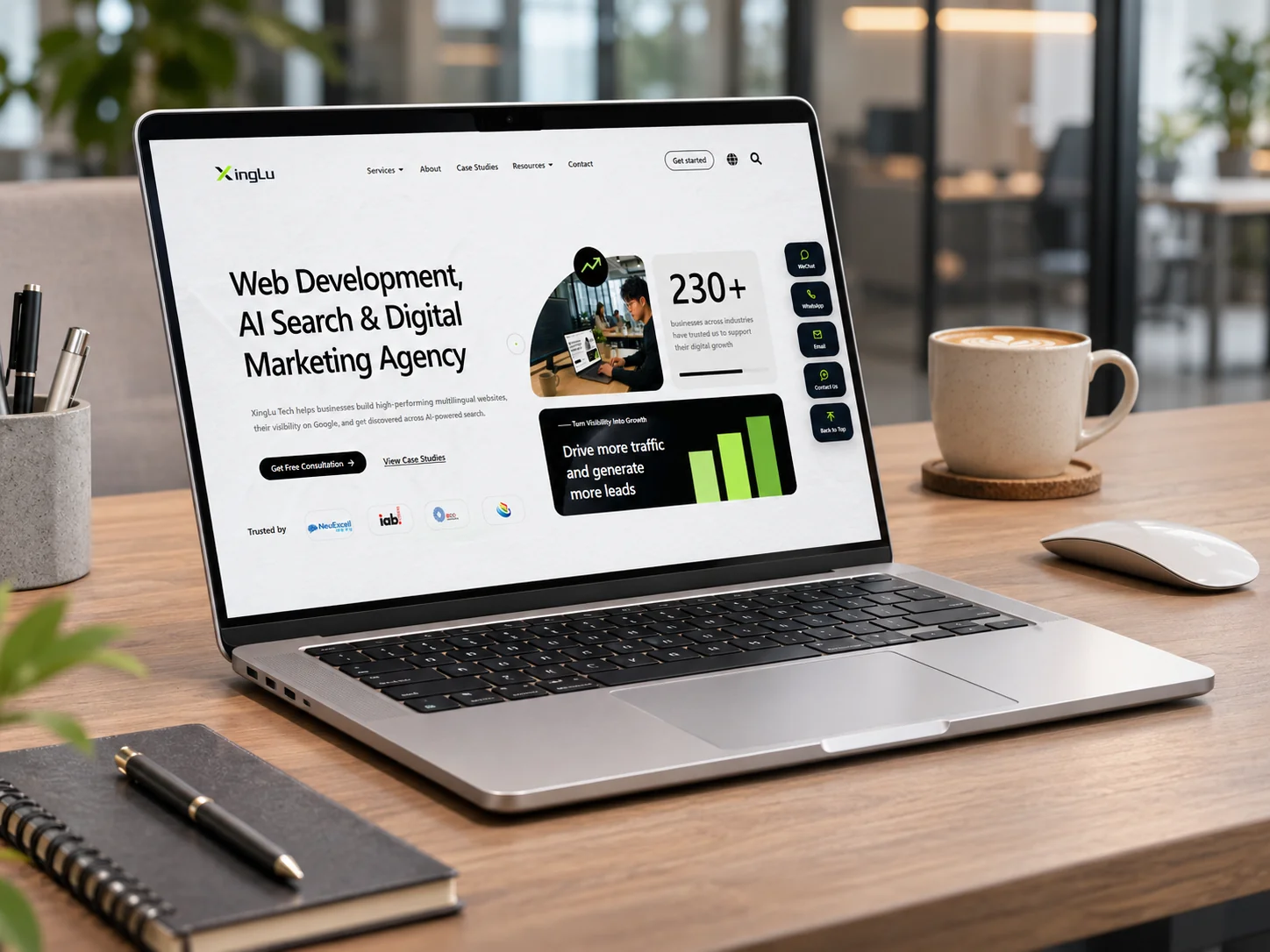
Getting website traffic but no leads? At XingLu Tech, we often hear this from businesses that have invested in a new website or SEO. In this article, we share 10 ways to find where potential customers drop off and make it easier for them to get in touch.
As a service provider, we can report keyword rankings, website traffic, and search impressions. For businesses, those numbers are only part of the picture.
The real goal of website development and SEO is to turn potential customers’ interest into genuine business opportunities.
How can companies close that gap? It’s a question that shapes how we approach our work at XingLu Tech.
1. Rethink What Website SEO Is Meant to Achieve
Many companies expect inquiries to follow once they launch a website and invest in ongoing SEO. But an inquiry is the outcome of a longer process. A potential customer typically needs to:
A problem at any of these stages can cost you a lead. Start with your business goals and use them to guide the entire process, from earning search visibility to making it easy for customers to get in touch.
2. Assess Whether the Website Meets Buyers’ Needs
Before investing further in SEO, review the website itself. Are its structure, copy, images, and basic SEO elements doing their job?
A business website that generates inquiries needs clear navigation, well-organized pages, professional product information, and accessible contact options.
For B2B exporters, international buyers often arrive with specific questions:
Even substantial search traffic may yield few qualified inquiries if buyers can’t find these answers. Review the website from their perspective and check whether it helps them make a decision.
3. Improve Website Speed and the Mobile Experience
Have you tested your website’s performance? A score of 90 or above in Google PageSpeed Insights can be an optimization target. Real-world performance matters too, including how quickly pages load and respond for actual users.
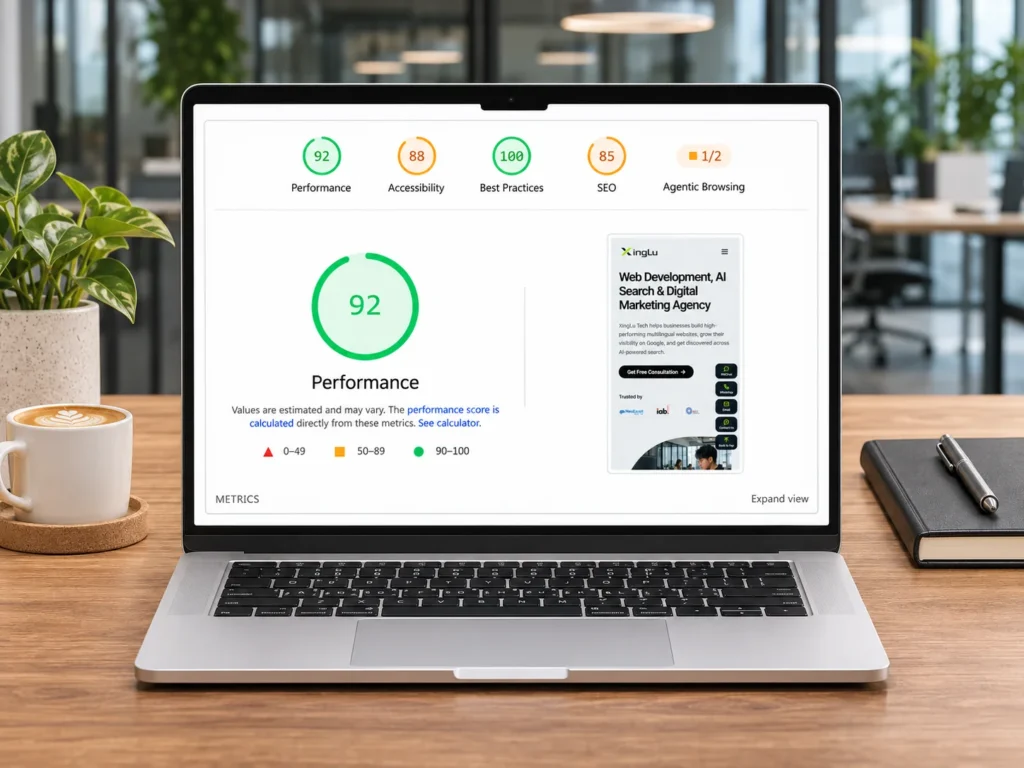
A potential customer who finds you on Google may leave if the page is slow, images take too long to appear, or navigation is difficult on a phone. Improvements may include compressing images, reducing server response times, improving caching, and optimizing CSS and JavaScript.
Consider real-user data and Core Web Vitals alongside the PageSpeed Insights score. A score of 90 is neither a requirement for rankings nor a guarantee of inquiries. The aim is to remove friction for the people visiting your site.
Every visit your business invests in earning deserves a website that works well.
4. Keep Your Website Up to Date After Launch
Once the site goes live, how often do you review product information, page titles, descriptions, and image alt text?
We often see businesses invest in a website and then go years without maintaining it. Product information becomes outdated, news sections go quiet, and new contact details may never make it onto the site. This limits what the website can do for the business.
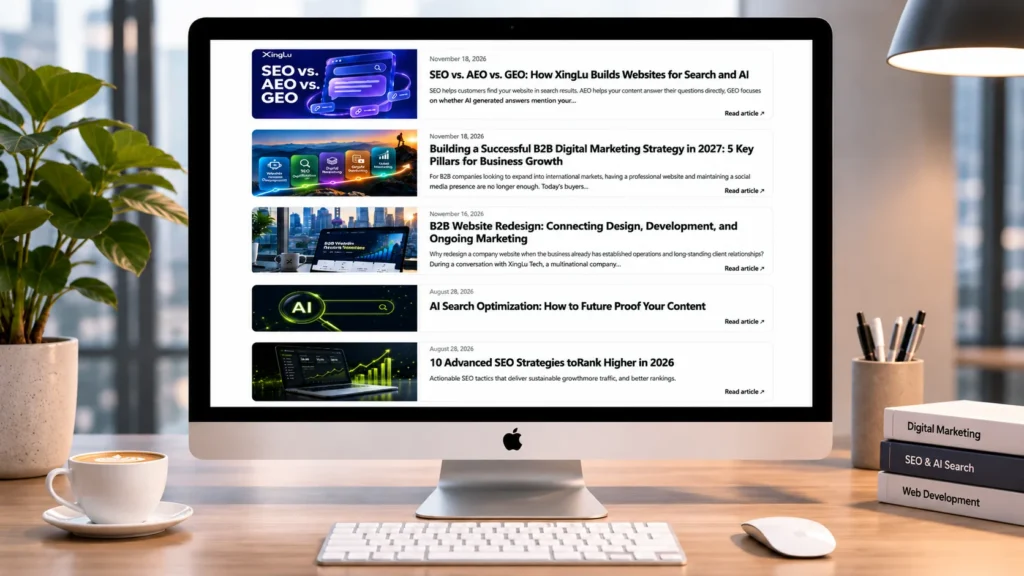
Make ongoing content and maintenance part of website operations. Industry updates, product guides, technical articles, case studies, and answers to common questions can give prospective customers more useful information and create more opportunities for them to discover the site through search.
5. Connect Your Website and Social Media
Are your social channels giving people a reason to visit your website? Can visitors find your company’s active social accounts from the site?
For exporters and other businesses reaching international buyers, LinkedIn, YouTube, and Facebook can help showcase products, expertise, and company capabilities. A technical article published on your website can become a short social post or a product demo. Interested readers or viewers can then visit your website for the full explanation and next steps.
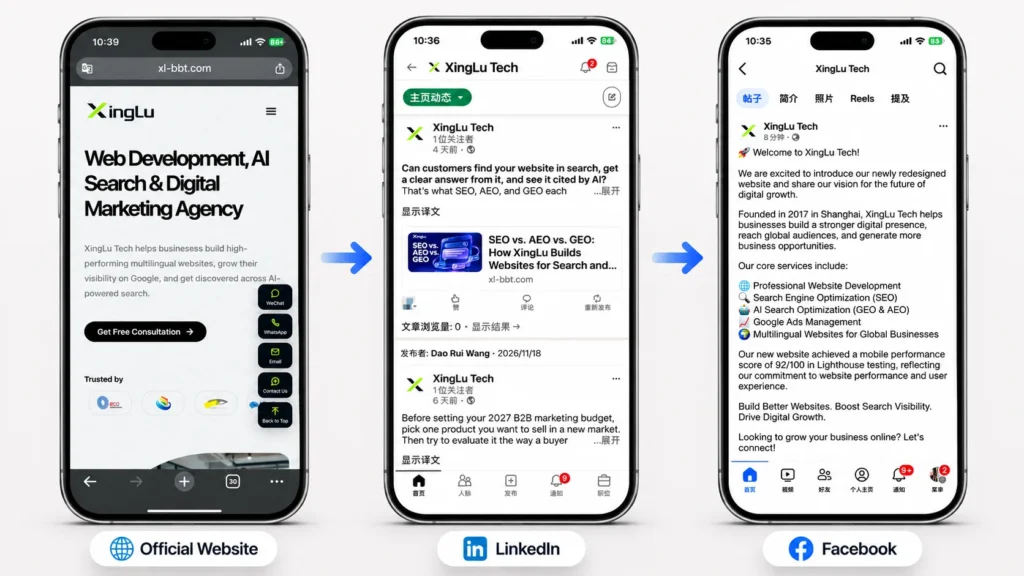
Social channels help people discover your business. Your website gives them a place to review detailed information, build confidence, and submit an inquiry.
6. Map SEO Keywords to the Right Pages
Decide which search queries each page should answer. Start with what a potential customer wants to accomplish, then match that search intent to the appropriate content.
For a manufacturer, the homepage can address broad searches about the company’s core business. Category pages can cover product families, individual product pages can target more specific searches, and blog articles can answer questions about applications, product selection, and purchasing.
Use internal links to connect related pages so buyers can move from research to product details and search engines can understand how the topics fit together.
A good SEO keyword strategy connects what customers are looking for with the products and services your business can provide.
7. Make Important Information Easy to Find
Review which information customers need and which design or content elements make it harder to find. A visitor looking for a product should be able to reach it quickly. Someone comparing specifications should be able to find the relevant documents. A buyer ready to talk should have a clear way to contact you.
Simplifying the experience means giving useful information more prominence. An effective business website shortens the path from learning about the company to making an inquiry.
8. Build Trust With Real Case Studies and Data
B2B buyers often assess a supplier’s expertise, production capabilities, delivery record, and industry experience before they make contact. Claims such as “industry-leading” and “high quality” are hard to assess on their own.
Real project examples, product test data, equipment photos, factory videos, certifications, and documented applications show buyers what the company can actually do. This firsthand evidence helps demonstrate experience, expertise, authoritativeness, and trustworthiness, often referred to as E-E-A-T.
As AI-powered search becomes another way buyers research suppliers, prioritize original content grounded in facts and real experience. Give readers specific information they can verify and use in their decisions.
9. Use Analytics to Find Where Visitors Drop Off
Website decisions should draw on data as well as judgment. These tools can help diagnose search, performance, and conversion issues.
Tool
Primary use
Google Search Console
Review search queries, impressions, clicks, and indexing status.
Google Analytics 4
Analyze traffic sources, visitor behavior, and conversions.
Google Tag Manager
Configure conversion events such as form submissions and email link clicks.
Google PageSpeed Insights
Assess website performance and page load experience.
Microsoft Clarity
Review user behavior with heatmaps and session recordings.
Semrush / Ahrefs
Research keywords, competitors, and backlinks.
Which queries bring visitors to the site? Which pages draw the most traffic? At what point do people leave? Which channels generate qualified inquiries?
Use the answers to decide what to change. A report is useful when it identifies a problem, helps you take action, and shows whether that action moved you closer to a business goal.
10. Build a Lead Generation Strategy Beyond SEO
At XingLu Tech, we bring website development, SEO, social media, Google Ads, and GEO (Generative Engine Optimization) together around the same business goals.
The website gives customers a place to learn about your business and contact you. SEO helps bring in organic search traffic. Google Ads reaches potential customers through paid campaigns. Social media broadens your brand’s reach. GEO focuses on how visible your business is in AI-powered search. Conversion optimization and analytics help you evaluate how these channels work together.
Alongside visits and keyword rankings, measure how many of those visits turn into qualified inquiries and genuine sales opportunities.
Conclusion: Measure Digital Marketing by the Opportunities It Creates
Companies invest in websites, SEO, and digital marketing so more potential customers can discover them, understand their offer, trust their business, and start a conversation.
For XingLu Tech, that goal shapes how we deliver website development, SEO, Google Ads, and GEO services. A website launch, a new article, and a ranking report are milestones. The ongoing work is improving the website’s structure, content, speed, and credibility, connecting marketing channels, and using data to help businesses generate leads over time.
Our goal is to make your website and every digital marketing investment contribute to a clear business objective.
If your website gets traffic but few inquiries, your SEO efforts are falling short, or your marketing spend is failing to generate business opportunities, contact XingLu Tech. We can discuss a website and digital marketing plan that fits your business and its stage of growth.